
portfolio detail
custom home builder website redesign Vancouver
Web Development

Custom Home Builder Website Rebuild.

Complete WordPress-to-modern-stack migration for a BC residential custom home builder — 71 blog posts preserved, full CMS independence, and a design-forward rebuild that matches the calibre of the product.

Next.jsHeadless CMSTailwind CSSVercelImage CDN
Scroll to explore
71

Blog Posts Migrated

< 1.5s

Page Load

90+

Lighthouse Score

Custom Home Builder Website Rebuild
(How We Built It)
01

Challenge

A dated WordPress site with slow load times, limited SEO capability, and a design that didn't reflect the quality of the builds. Content updates required developer intervention, and the site couldn't scale with a growing service offering.

02

Approach

Migrated the entire site to a modern headless stack — extracting every blog post with full rich-text formatting, moving the image library to a CDN, and rebuilding every service page with a bold, editorial design language.

03

Results

A production site with sub-1.5s load times, full CMS independence for the client, and an architecture that supports programmatic SEO pages, multi-location expansion, and AI-assisted content workflows.

(Screenshots)
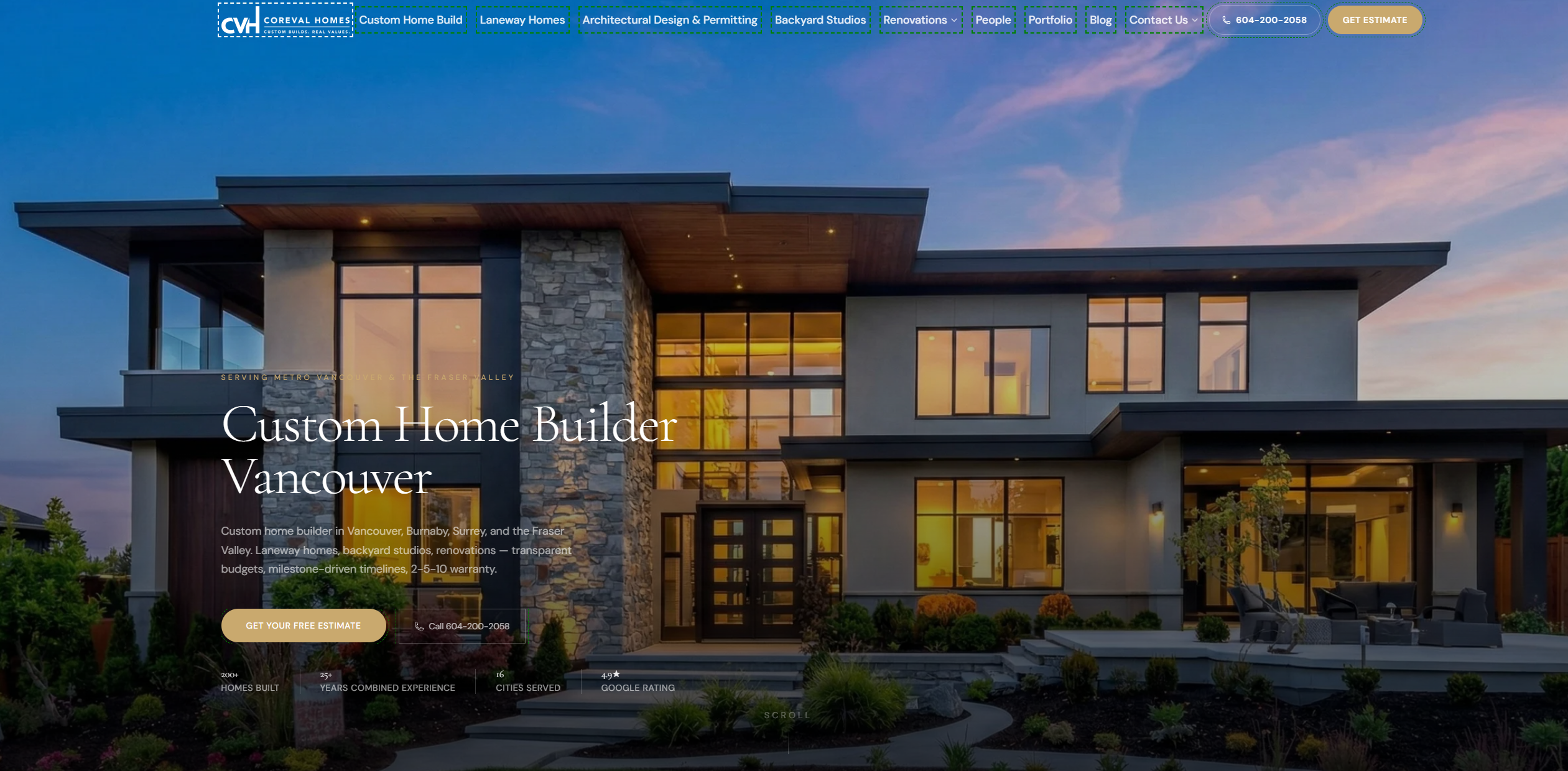
Custom Home Builder Website Rebuild screenshot 1
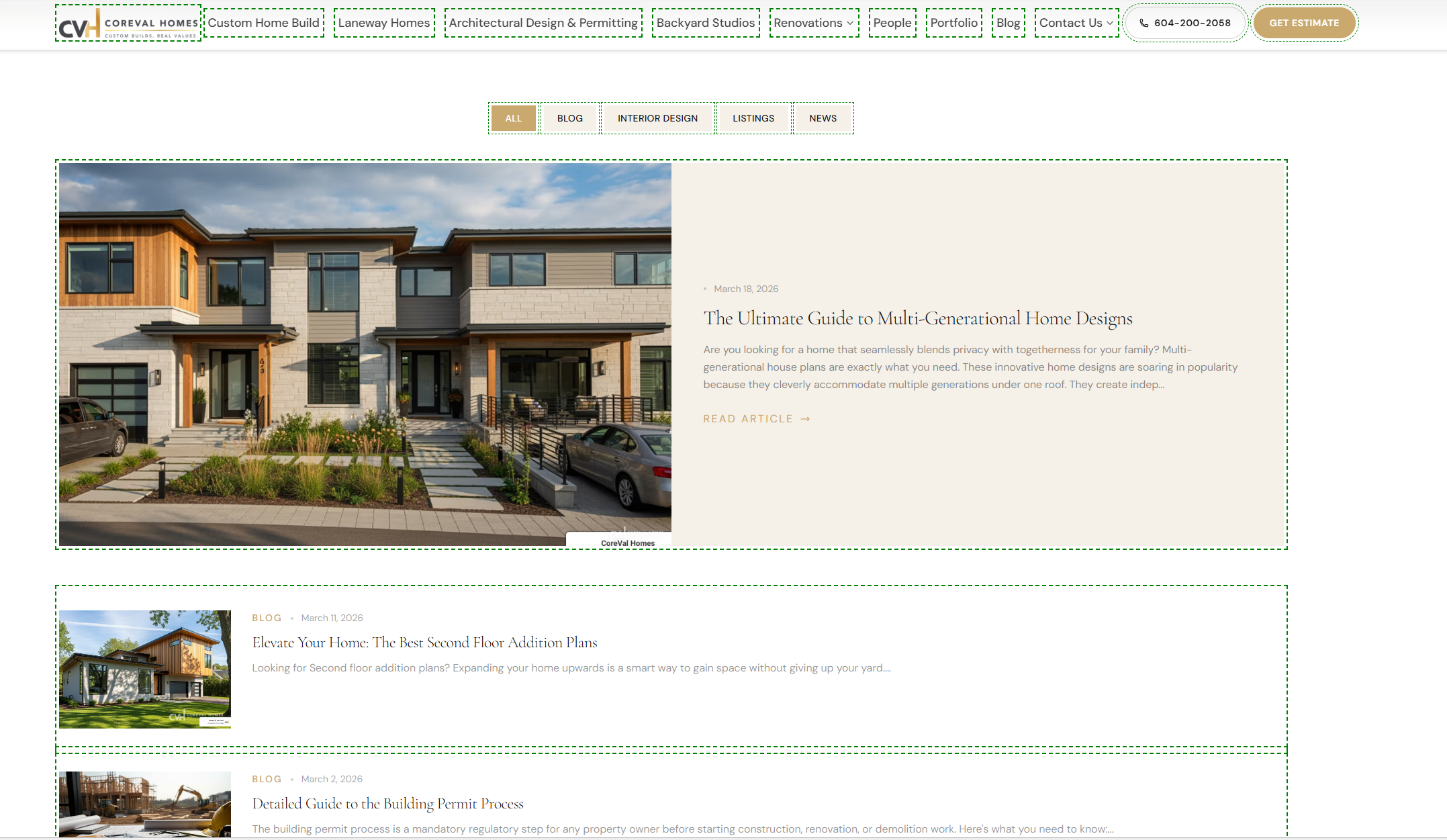
Custom Home Builder Website Rebuild screenshot 2
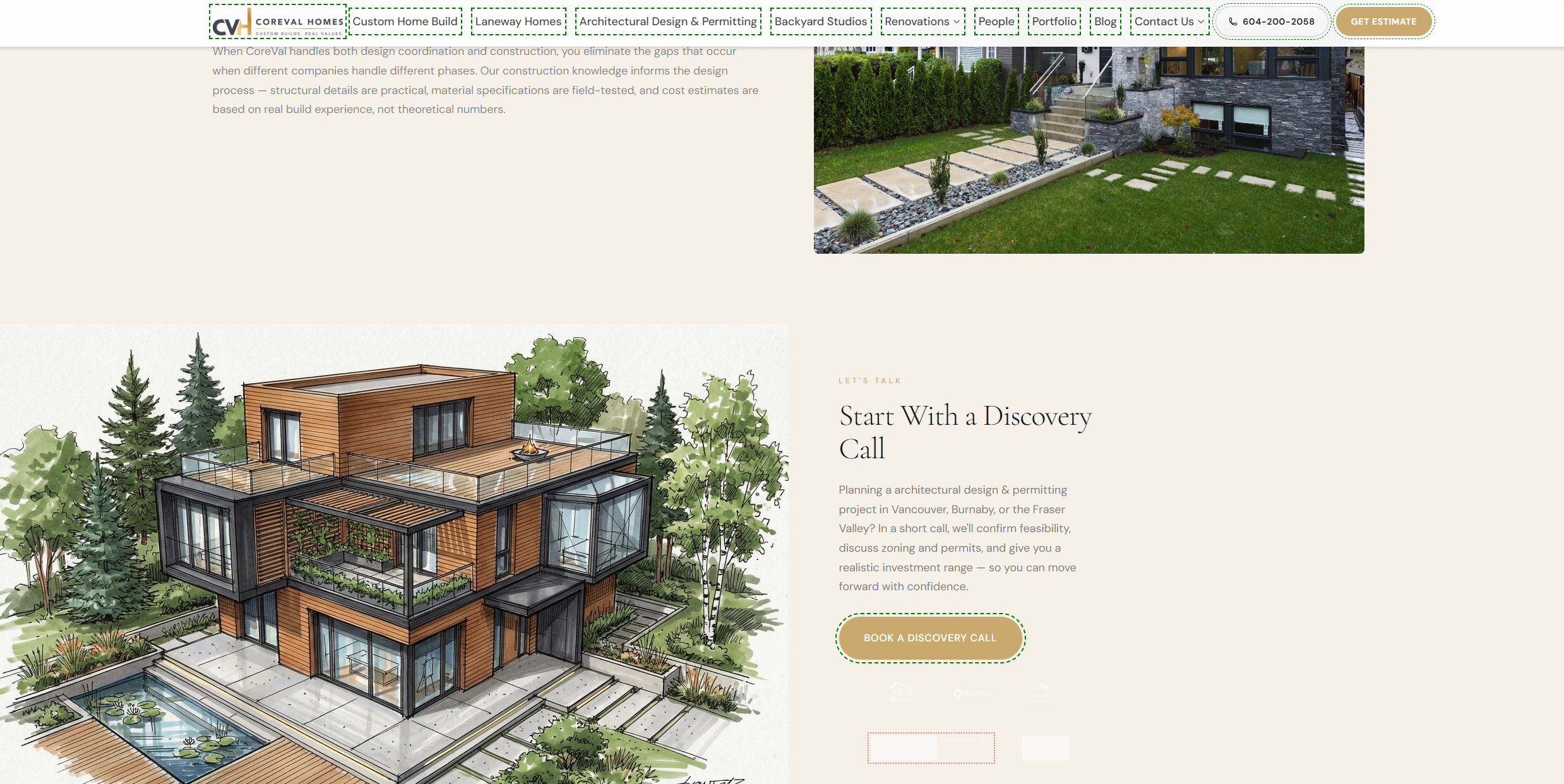
Custom Home Builder Website Rebuild screenshot 3
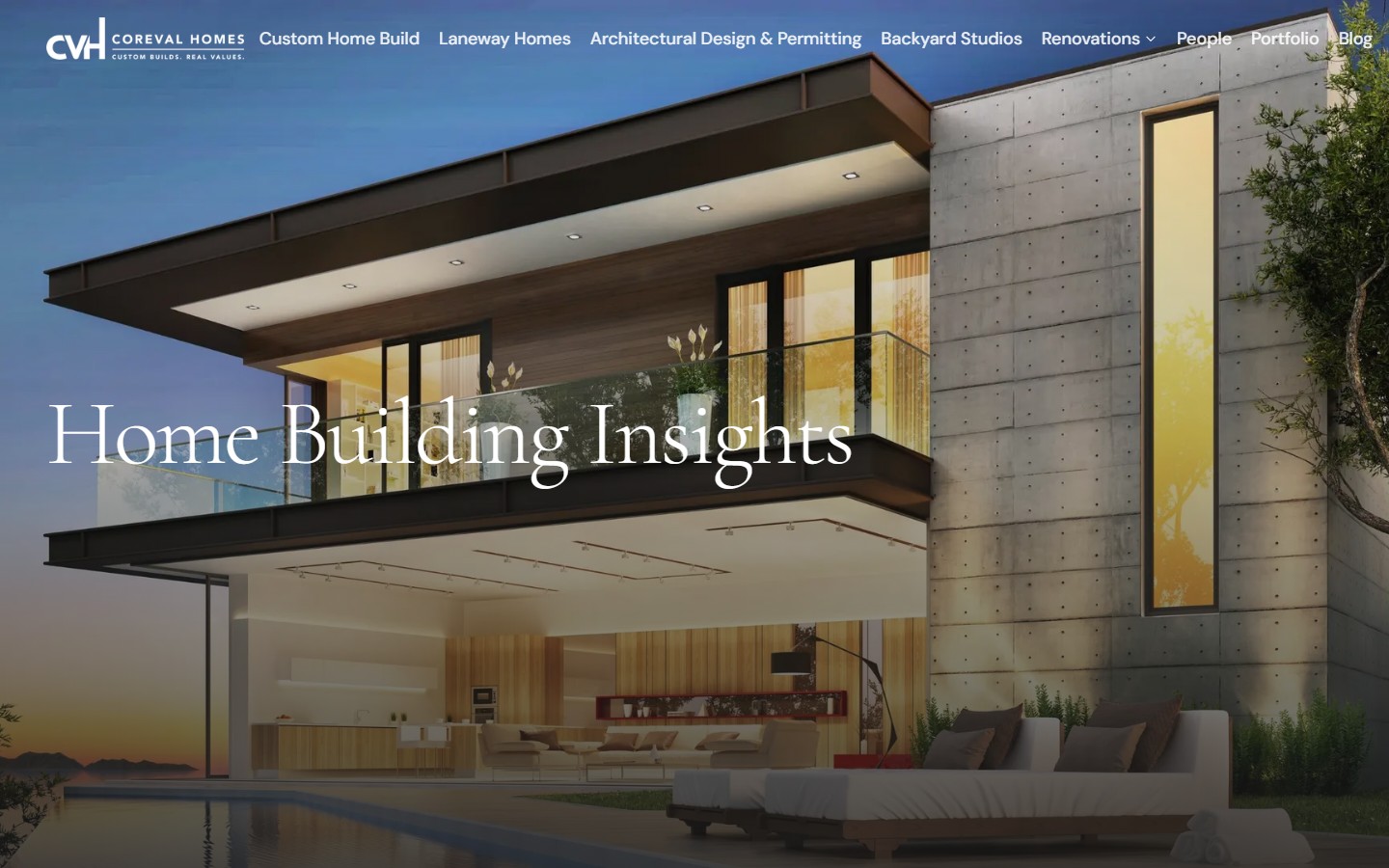
Custom Home Builder Website Rebuild screenshot 4
Custom Home Builder Website Rebuild screenshot 5
Custom Home Builder Website Rebuild

The full story behind Custom Home Builder Website Rebuild.

(Case Study)
01

The Problem: A WordPress Site That Couldn't Scale

The client is a BC-based custom home builder specializing in new builds, major renovations, and laneway homes. Their existing website was built on WordPress — a setup that had served them adequately for years but was increasingly a liability.

The site loaded slowly, averaging over 4 seconds on mobile. The theme was rigid, making design changes expensive and time-consuming. The blog — their primary content marketing asset, with over 70 published articles — was trapped inside a monolithic architecture. Adding structured data, optimizing images, or implementing modern SEO techniques required plugin stacking that only compounded the performance problems.

More critically, the design didn't match the calibre of the work. They build custom homes that sell for seven figures. Their website looked like it was assembled from a cheap theme. For a business where trust is everything — homeowners are handing over their largest financial asset — that visual disconnect was costing them leads.

The setup also created an operational bottleneck. Every content update, whether publishing a post or modifying a service description, required coordinating with a developer. The team couldn't move independently, which meant the site was always slightly behind the business.

They needed a platform that could scale: fast, visually premium, SEO-optimized, and fully manageable by their internal team.
02

The Migration: 71 Blog Posts, Zero Content Loss

Migrating from WordPress to a modern stack isn't just about rebuilding pages — it's about preserving years of content equity. This blog represented hundreds of hours of content creation and had accumulated meaningful search authority. Losing that content, or degrading it during migration, wasn't an option.

We built a migration pipeline that extracted every blog post with full fidelity, parsing the original HTML content blocks and converting them into the new system's structured rich-text format — preserving headings, lists, bold and italic formatting, hyperlinks, and inline images. This wasn't a text dump. Every piece of structural formatting was mapped to its equivalent so the content rendered identically after the move.

The image migration was equally thorough. We identified 69 images across the blog, downloaded and optimized each one, and moved them onto a CDN with proper alt text attribution. For posts without a hero image, we assigned contextually appropriate images so every post had visual representation in the blog grid.

The result: all 71 blog posts live in the new CMS with full formatting, proper image assignments, and clean URL structures. The entire content library was preserved without a single broken link, missing image, or formatting regression.

03

Design Elevation: From Template to Editorial

The design brief was clear: don't match the old site, elevate it. This client builds premium homes. Their digital presence needed to reflect that positioning.

We developed a design language rooted in the brand's existing colour palette — charcoal, gold, warm white, and cream — applied with an editorial sensibility borrowed from architecture and luxury real estate publications. Full-bleed hero images span the viewport height on every service page. The typography system uses generous sizing with a minimum body text of 19 pixels, eliminating the cramped small-text aesthetic that plagues most contractor websites.

Every service page — custom builds, renovations, laneway homes, additions — follows a consistent layout template while keeping its own visual identity through unique hero imagery and section photography. Each page got unique, contextually appropriate visuals rather than recycled stock.

The blog received particular attention. Each post renders with a branded watermark on images, structured FAQ sections, TLDR summaries, and clear internal linking. The blog grid uses proper aspect ratios and hover animations that feel refined rather than generic.

The homepage hero loads at full viewport height in a high-resolution variant, creating an immediate impression of quality. Section transitions use subtle scroll-triggered animation that guides the visitor through the story without feeling gimmicky.

04

The Architecture: Built for Speed of Response

The technology decisions were driven by one principle: deployment speed. In home construction, marketing velocity matters. When a competitor launches a new service, the client needs to respond with optimized content in days, not weeks.

The framework provides the rendering foundation — server-side rendering for SEO-critical pages, static generation for the blog archive, and client-side interactivity for forms and galleries. The hybrid approach means search engines receive fully rendered HTML while visitors get a responsive, app-like experience.

A headless CMS is the content backbone. Decoupling content from presentation means the team can publish posts, update service descriptions, modify FAQs, and swap hero images without touching code. Changes reach production in under 60 seconds. The schema supports structured content types — rich text with embedded images, CTAs, and FAQ blocks — that power both the page rendering and the structured data markup for search engines.

An image CDN handles visual delivery, with automatic format negotiation and variant-based sizing. High-resolution variants serve above-the-fold impact while standard variants optimize inline content. That eliminated the image performance problems of the old setup without sacrificing visual quality.

The hosting platform serves the application with automatic SSL, edge caching, and global distribution, plus preview URLs for every content change so the client can review updates before they go live.

The whole architecture was designed with expansion in mind. Adding programmatic SEO pages for neighbourhood-specific landing pages, multi-location support for new markets, or AI-assisted content generation requires configuration changes, not architectural rewrites.

05

Results: A Platform That Matches the Product

The rebuilt site launched with measurable improvements across every metric that matters for a service business.

Page load times dropped from over 4 seconds to under 1.5 seconds on mobile. Lighthouse scores consistently hit 90+ across performance, accessibility, and SEO. The 71 migrated blog posts retained their search equity through proper URL mapping and redirect handling.

The content workflow was transformed. Where the old setup required developer coordination for every update, the team now publishes independently — writing, previewing in real time, and deploying with a single click. Publishing cadence increased immediately because the operational friction was gone.

The design elevation had a direct impact on lead quality. Visitors now encounter a site that matches the premium positioning of the builds. Full-bleed hero imagery, editorial typography, and polished animation communicate craftsmanship before the visitor reads a word of copy.

Most importantly, the new architecture is a competitive infrastructure advantage. While competitors wrestle with plugin updates and theme limitations, this client has a modern, scalable platform that can absorb AI content tools, programmatic SEO, and multi-market expansion as the business grows. The site isn't just a marketing asset — it's a growth platform built for the next decade.

Want Something Like This?

Every project starts with a conversation. Tell me the problem — I'll show you the system that solves it.