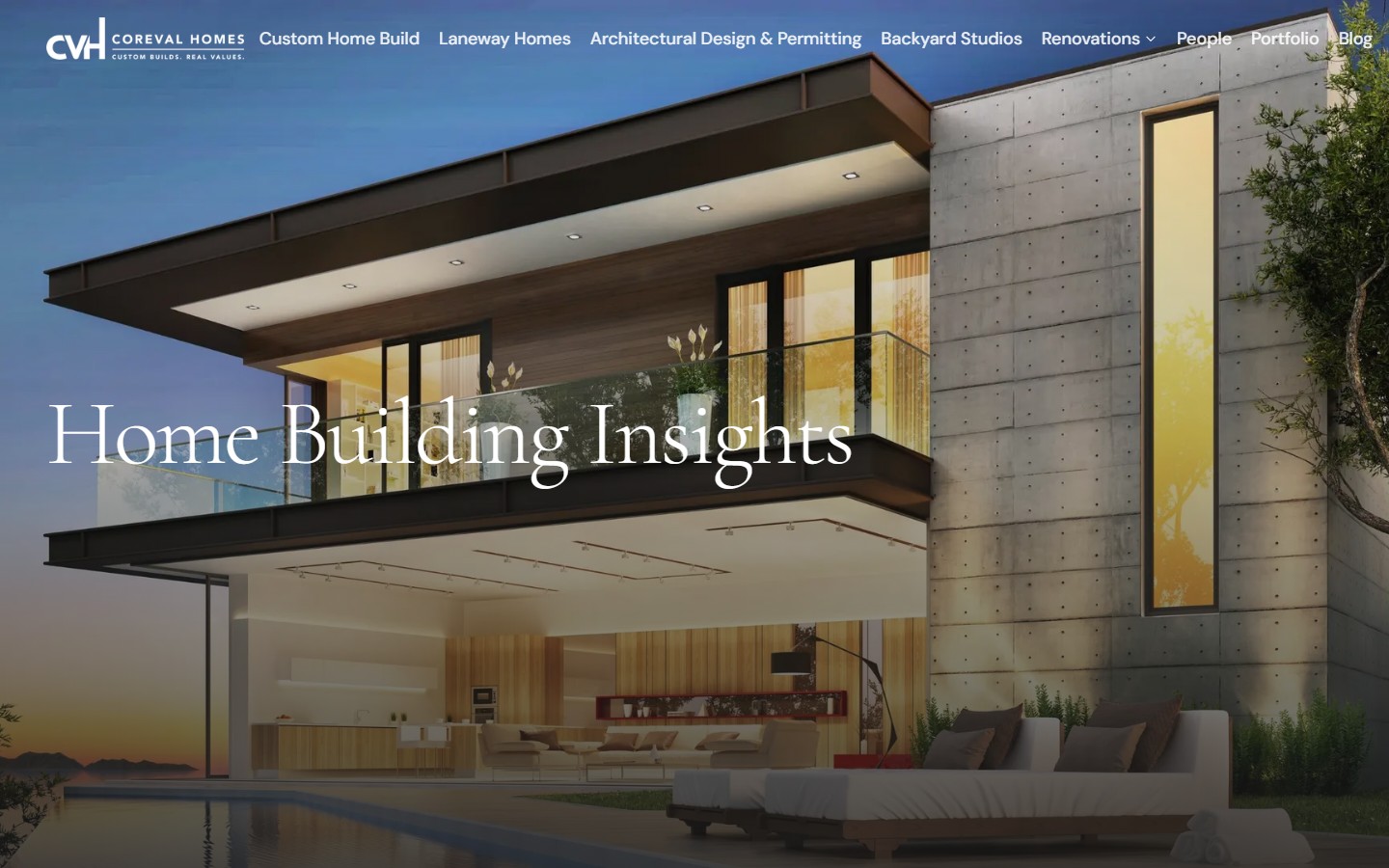

The Problem: A WordPress Site That Couldn't Scale
The client is a BC-based custom home builder specializing in new builds, major renovations, and laneway homes. Their existing website was built on WordPress — a setup that had served them adequately for years but was increasingly a liability.
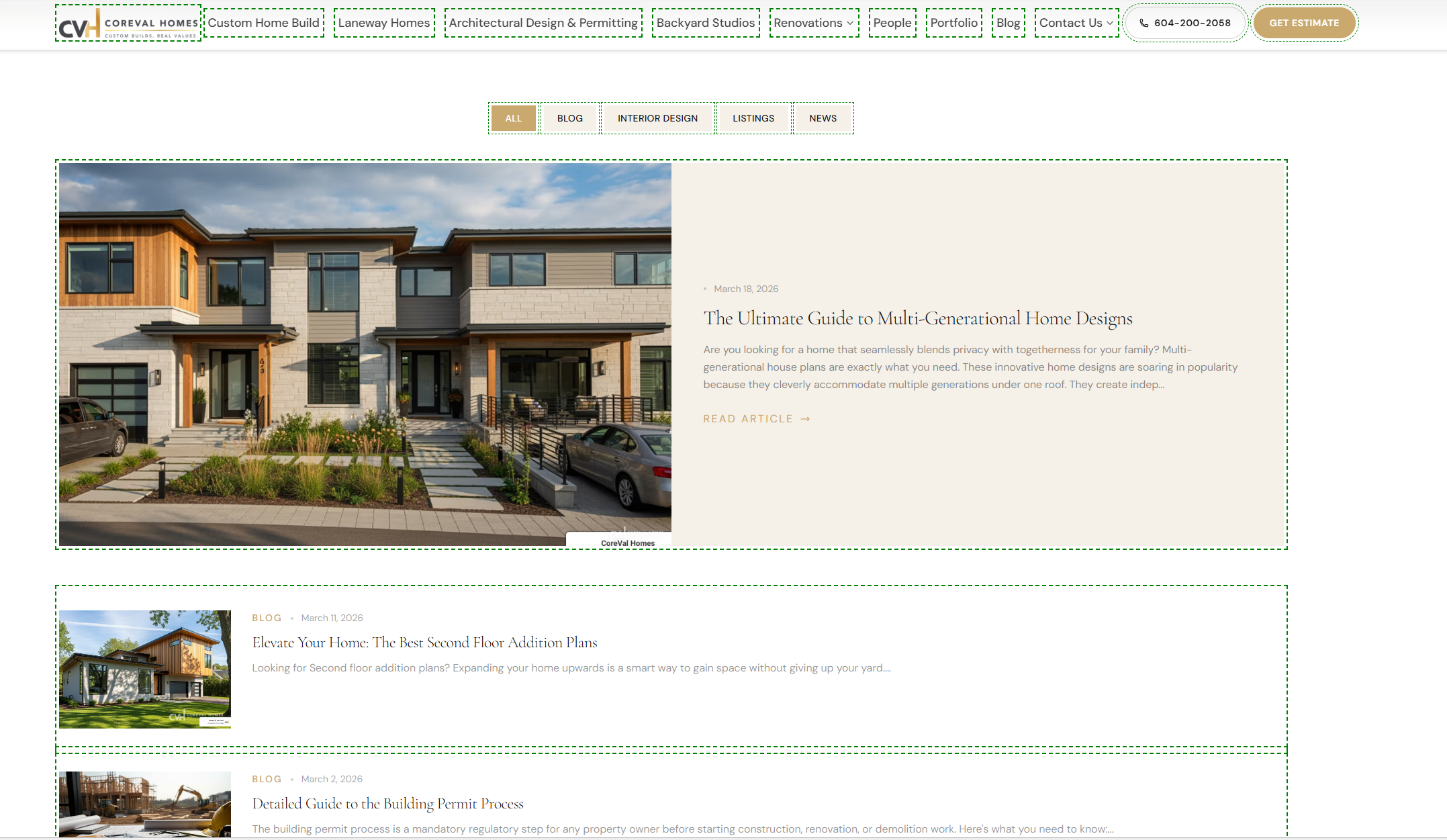
The site loaded slowly, averaging over 4 seconds on mobile. The theme was rigid, making design changes expensive and time-consuming. The blog — their primary content marketing asset, with over 70 published articles — was trapped inside a monolithic architecture. Adding structured data, optimizing images, or implementing modern SEO techniques required plugin stacking that only compounded the performance problems.
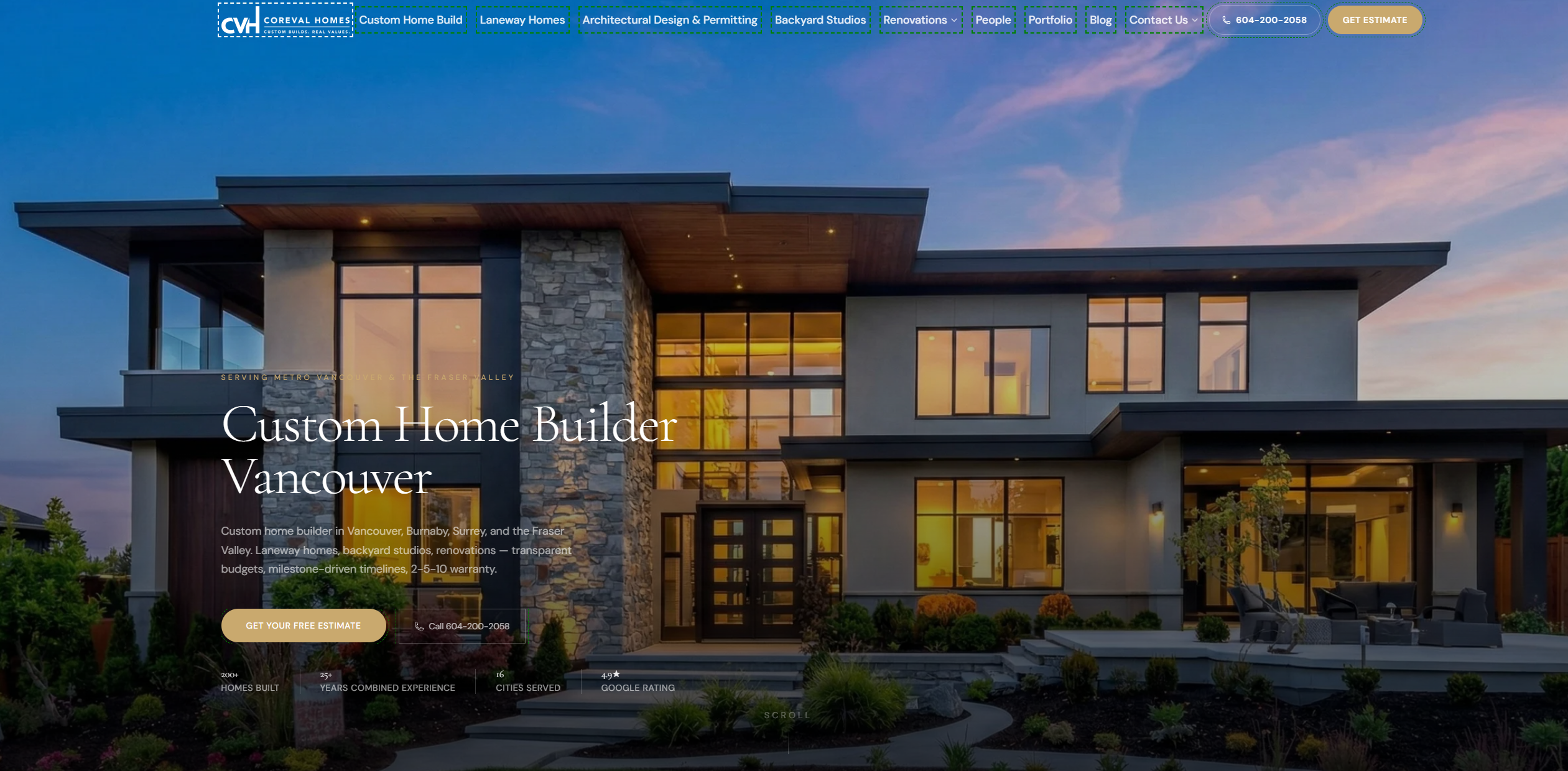
More critically, the design didn't match the calibre of the work. They build custom homes that sell for seven figures. Their website looked like it was assembled from a cheap theme. For a business where trust is everything — homeowners are handing over their largest financial asset — that visual disconnect was costing them leads.
The setup also created an operational bottleneck. Every content update, whether publishing a post or modifying a service description, required coordinating with a developer. The team couldn't move independently, which meant the site was always slightly behind the business.
They needed a platform that could scale: fast, visually premium, SEO-optimized, and fully manageable by their internal team.