Google Says 67% of Customers Prefer Messaging Over Calling — Here's Why Local Businesses Lose Leads Every Day

Quick Check
对还是错:AI 工具将在 2 年内完全取代 SEO 的需求。
- Many customers would rather message a business than call, yet most local businesses have no fast way to answer a message.
- A lead that messages at 9 PM and gets silence often doesn't call back in the morning. They may book with whoever replied first.
- Messaging works best when it answers the few questions every customer asks before booking, at any hour.
- The system: website chat or text messaging + an AI qualifier + calendar integration + an n8n workflow.
- Here's the workflow, how to measure it, and the mindset shift that decides whether it works.
Why Do Vancouver Local Businesses Keep Losing Leads to Missed Calls?
Every missed call is a lead at risk.
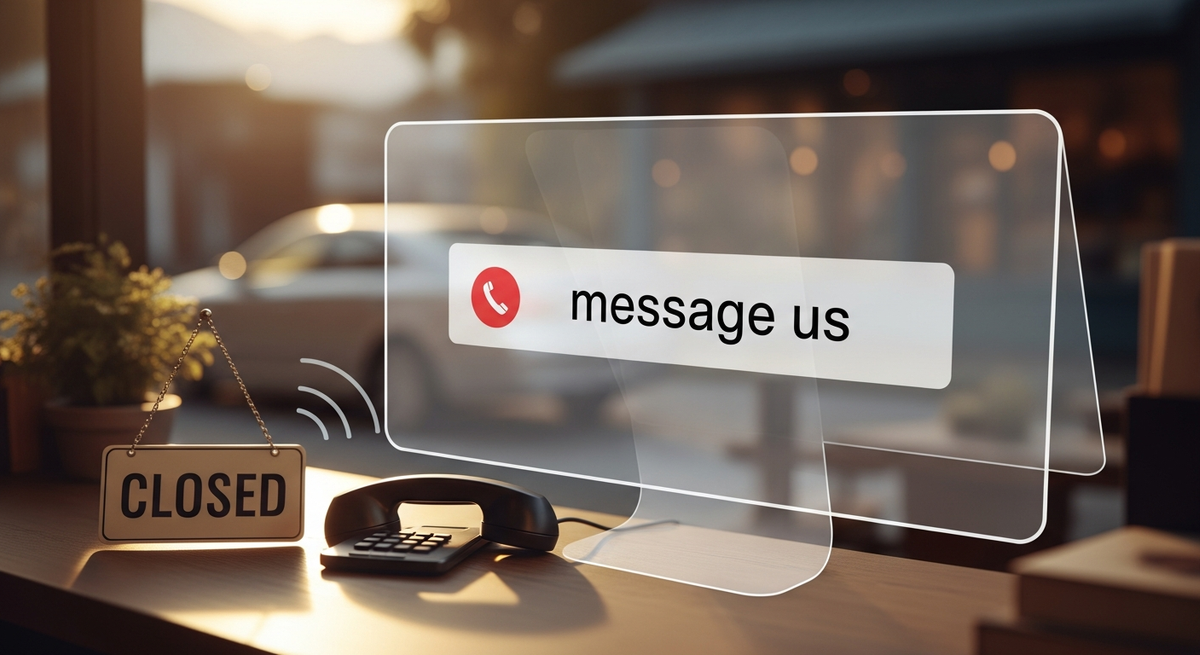
Here's what actually happens. Your crew is out on a job. The phone rings at the shop. Nobody picks up. The customer waits forty seconds, hears voicemail, and hangs up. Then they Google the next plumber, dentist, or moving company on the list.
This plays out every day for busy service businesses. It's not only a staffing problem. It's a channel problem.
Speed matters because a customer who can't reach you keeps searching. The longer a lead waits for a first reply, the more time they have to find and book someone else. That should worry any service business owner running a callback system.
The phone-first model isn't broken because phones are bad. It's broken because customers don't wait anymore.
The business owner who says "we always call back" is measuring against their own standard. The customer is measuring against every other option they found on Google in the last ten minutes. They've already moved on.
What Does Customer Messaging Preference Actually Mean for Your Business?
Some customers would rather send a message than make a phone call when they reach out to a business.
They want to do it while they're at work. While they're making dinner. At 10 PM when they remember they need to book an appointment.
They want to describe the problem in their own words, attach a photo if they have one, and get a real answer — without sitting on hold.
Here's the gap. Most local businesses are set up for phone calls. A phone number front and center. A contact form that takes days to get a response. No text or chat option at all, or one that nobody is watching.
Customers who prefer messaging aren't calling. They're clicking away.
Google has been changing what a Business Profile offers: it has discontinued the Q&A API, and its Business Messages developer pages now show RCS for Business documentation instead. So don't rely on a Google chat button. Give customers a way to message you that you control, such as website chat or text messaging, and make sure someone, or something, answers.
Start with your own data before you decide. Check your call logs, voicemails, contact form submissions and website analytics: how many people reached out after hours, and how many got a reply? When owners see those numbers, the "my customers prefer to call" story often falls apart on its own.
The gut feeling is based on the people who call. The data shows the people who tried another way and never came back.
Is Messaging Actually Better for Conversions Than Phone Calls?
The standard assumption: phone calls mean serious buyers. Texts mean window shoppers.
That assumption doesn't hold up well.
Think about your own purchasing behavior. When you're serious about hiring a contractor, do you call cold? Or do you search, check reviews, and then send a message explaining exactly what you need?
A customer who messages at 10 PM with a detailed problem description and asks for a quote is further along the buying process than someone who calls and says "how much does it cost?" The message customer has already done their research. They've seen your reviews. They're ready to decide — they just need a fast, informative response.
Text conversations build a paper trail. They let customers think through what they want to say. They let you respond with links, photos, formatted quotes, and appointment confirmations that a phone call can't deliver.
Text messages are also easy to see. A quote or appointment confirmation sent by text lands where customers already check their messages, while an email confirmation can sit unread in a crowded inbox.
What's the Exact Workflow for Moving a Local Business to Messaging-First?
Here's the workflow, step by step.
Step 1: First contact via your website or text
The customer messages through a chat widget on your website or by text. The AI greets them and asks what they need in plain, direct language. No corporate script. No "Thank you for reaching out." Just: "What are you looking for help with?"
Step 2: Qualification
The AI asks structured questions. Is this an emergency or a scheduled job? What area of the city? Does the situation require same-day service? These questions filter leads before any human time gets spent. Hot leads route immediately. Routine inquiries continue into the booking flow.
Step 3: Calendar access
For routine bookings, the AI connects to the business calendar — Google Calendar, Calendly, or most standard scheduling tools. It checks availability and offers two specific appointment slots. Not "we'll call you to schedule. " A specific date and time. Today or tomorrow.
Step 4: Confirmation and prep instructions
The customer picks a slot and confirms. The AI sends a text with the appointment details and any prep notes. "Here's the address, here's what to bring, here's what to expect. " The owner wakes up to a full calendar they never had to touch.
For emergencies — if the customer answers yes to "is this urgent?" — the message routes directly to the on-call tech's phone as an SMS or push alert. The AI handles routine inquiries automatically. Human response kicks in for the complex cases that need it.
The whole system runs on n8n, an open-source workflow tool, connected to an AI assistant and the business's calendar. How long it takes to build depends on your tools and how many questions it needs to handle. Once it's tuned, it can handle routine inquiries without a person stepping in.
You can see how this type of workflow gets built for service businesses: the tools, the integrations, and what the process looks like from brief to live.
Why Do Business Owners Resist Messaging — and What Actually Changes Their Mind?
One common objection: "I don't want to be available 24/7."
They picture themselves answering texts at midnight. That's the fear. It's also the exact problem AI messaging solves.
You automate precisely because you don't want to be available around the clock. The AI handles late-night inquiries. You wake up with appointments already booked. You never see most of those conversations because they're already resolved.
Another objection: "My customers are older. They don't text."
Look at who actually contacts you before assuming. Adult children sometimes book appointments on a parent's behalf, and many of them would rather text than call.
The third objection is the hardest because it's not about data. It's about trust.
Here's a common way it fails. A business sets up a messaging system that answers questions, takes reservations, and confirms bookings. Technically, it works. Then the owner bypasses it for every inquiry, texting customers back by hand instead of letting the system do its job. The system never gets a chance to prove itself.
Technology is only half the equation. If the business owner isn't ready to trust an AI with routine inquiries — even one that handles them correctly — the system fails. Not because the tech failed. Because the human didn't change.
That's why the change-management conversation matters as much as the build. What does success look like? What are you willing to let the AI handle? What do you need to see before you trust it? Answer those questions first. Then build.
How Do You Measure Whether AI Messaging Is Actually Working?
Three numbers tell the real story.
Inquiry volume by channel. Track how many inquiries arrive by phone, website chat, text and contact form each month. Watch the messaging share over time as customers learn the option exists.
Response time. How long before a customer gets a first reply? An automated reply can go out within seconds. A busy service business without automation can take hours. Every hour a lead waits is time they can spend booking someone else.
Conversion rate from inquiry to booked appointment. This is the metric that matters most. Compare how many message inquiries turn into booked appointments against phone inquiries, and check whether faster replies change that rate.
In the fifth edition of Salesforce's State of the Connected Customer report (2022), 88% of customers said the experience a company provides is as important as its products or services (Salesforce). Speed of response is part of that experience.
For a closer look at how messaging performance connects to your broader local search visibility, Zealous Digital Solutions works with Vancouver service businesses across all of these channels.
What Are the Most Common Mistakes When Setting Up Business Messaging?
Four mistakes show up in almost every implementation.
Mistake 1: Building before auditing the gap.
Before building anything, look at your own numbers: after-hours calls that went to voicemail, contact forms that waited days for a reply, and messages nobody answered. That's your highest-priority problem. Start responding manually, and understand the volume before you automate it. Know what you're automating first.
Mistake 2: No qualification layer.
A system that just says "how can I help?" collects a lot of low-quality conversations. The AI needs qualifying questions from the first message — emergency or scheduled, service area, type of problem. This filters leads before any human time gets spent. It also makes the AI far more useful because it routes the right leads to the right places.
Mistake 3: Treating messaging as an add-on.
Businesses that win with messaging restructure their intake around it. Messaging becomes the primary channel. Phone stays available for people who need it. But the default experience leads to messaging. When messaging is a secondary option nobody is actively managing, it performs like a secondary option — which means it barely performs at all.
Mistake 4: Not reviewing early conversations.
The first two weeks are the calibration window. Read every conversation. See where the AI handled it cleanly and where it stumbled. Tune the prompts. That review makes the system significantly better and, importantly, builds your own trust in it. After two weeks, spot-checks are enough. But skipping the review period means shipping a system you've never actually pressure-tested.
The AI messaging and automation services at FrankYao.com can include this calibration process as part of implementation, not as something you figure out on your own afterward.
Does AI Messaging Work for Every Type of Local Vancouver Business?
Yes, with one condition. There has to be an intake process worth automating.
If you get one inquiry a day and you always reply in ten minutes, you don't have a lead capture problem. You might have a traffic problem. AI messaging won't solve that.
Where it works best: service businesses with consistent inquiry volume, after-hours contact attempts, and a booking or consultation step between first contact and revenue. That describes most plumbers, dentists, contractors, movers, real estate agents, and home service businesses across Vancouver.
Start by mapping your ten most common incoming questions. What do people ask before they book? What repeats in every initial phone call? If you can automate consistent answers to those ten questions, you've covered a significant portion of your incoming conversation volume without anyone touching a phone.
One important distinction: this performs differently for B2C versus B2B. For Vancouver B2C service businesses — dentists, contractors, movers, cleaners, home services — AI messaging tends to fit well because you're talking to individuals making fast decisions. For B2B, the workflow needs more customization around longer cycles and multiple decision-makers.
But for the local service business that's losing leads to voicemail every single day, messaging-first AI is the fastest path to capturing leads that are already there, already searching, and already trying to reach you.
Book a discovery call at FrankYao.com to see how an AI messaging workflow would look for your business, and where your biggest lead capture gaps are right now.
Where should you go next?
For the next step, visit FrankYao.com services. For the next step, visit FrankYao.com contact page. For the next step, visit FrankYao.com blog resources.
Test Your Knowledge
1. According to the article, why does response speed matter for leads?
- A. It doesn't; customers always wait for a callback
- ✅ B. The longer a lead waits, the more time they have to book someone else
- C. Faster replies only matter for B2B sales
- D. Response time only matters during business hours
The article explains that a customer who can't reach you keeps searching, so every hour of waiting gives them time to find and book another business.
2. Most local businesses are currently set up to cater to which customer preference?
- A. Customers who prefer messaging
- ✅ B. Customers who prefer phone calls
- C. Customers who prefer email contact
- D. Customers who prefer video consultations
The article notes that most local businesses are set up for phone calls, with no fast way to answer a message.
3. What does the article suggest an after-hours AI inbox should answer first?
The few questions nearly every customer asks before booking, such as your hours, whether you're taking new clients, and how to book.
4. According to the article, why are customers who send detailed messages typically further along in the buying process than those who call?
Messaging customers have already researched the business, reviewed its credentials, and formulated their specific needs before reaching out, whereas phone callers are often still in the information-gathering stage.
FAQ
What does customer messaging preference mean for my local business?
It means some potential customers want to message you instead of calling. If your business isn't set up to receive and respond to messages quickly, you can lose those customers. Start by adding a messaging option you control, such as website chat or text, and by checking how many after-hours inquiries currently go unanswered.
How fast does a business need to respond to a message to convert that lead?
There's no single magic number, but faster is better: every hour a lead waits is time they can spend finding someone else. An automated first reply can go out within seconds, while a busy service business without automation can take hours.
Is AI messaging too complicated for a small local service business to set up?
Not with the right tools. An AI messaging workflow built on n8n with a calendar integration can handle qualification, booking, and follow-up for routine inquiries. You don't need a developer on staff or a large tech budget. You need a clear map of your ten most common questions and someone who knows how to wire the workflow.
What if my customers really do prefer calling over texting?
Check your own data before deciding: missed calls, voicemails, after-hours contact forms and unanswered messages. Keep phone support available. The instinct about customer preferences is usually based on who calls; the data shows who tried another way and left.
How is AI business messaging different from a contact form on my website?
A contact form is passive. Someone fills it out, it sits in an email inbox, and you might respond hours later. AI messaging is active. It responds in seconds, qualifies the lead, and can book the appointment before the customer looks at another option.
Where Are You Right Now?
你的业务目前在 AI 方面最大的挑战是什么?