portfolio detail
AI Digital Model Platform
AI Automation

AI Digital Model Platform.

A production platform that generates realistic AI model imagery on demand, with consistent identity across wardrobe, setting, and format — built and shipped in one week.

ReactAI/MLCloud StorageNode.js
Scroll to explore
< 30s

Generation Time

Production-grade

Asset Quality

7 days

Time to Launch

AI Digital Model Platform
(How We Built It)
01

Challenge

Producing production-quality model imagery required expensive photoshoots, specialized equipment, and weeks of turnaround.

02

Approach

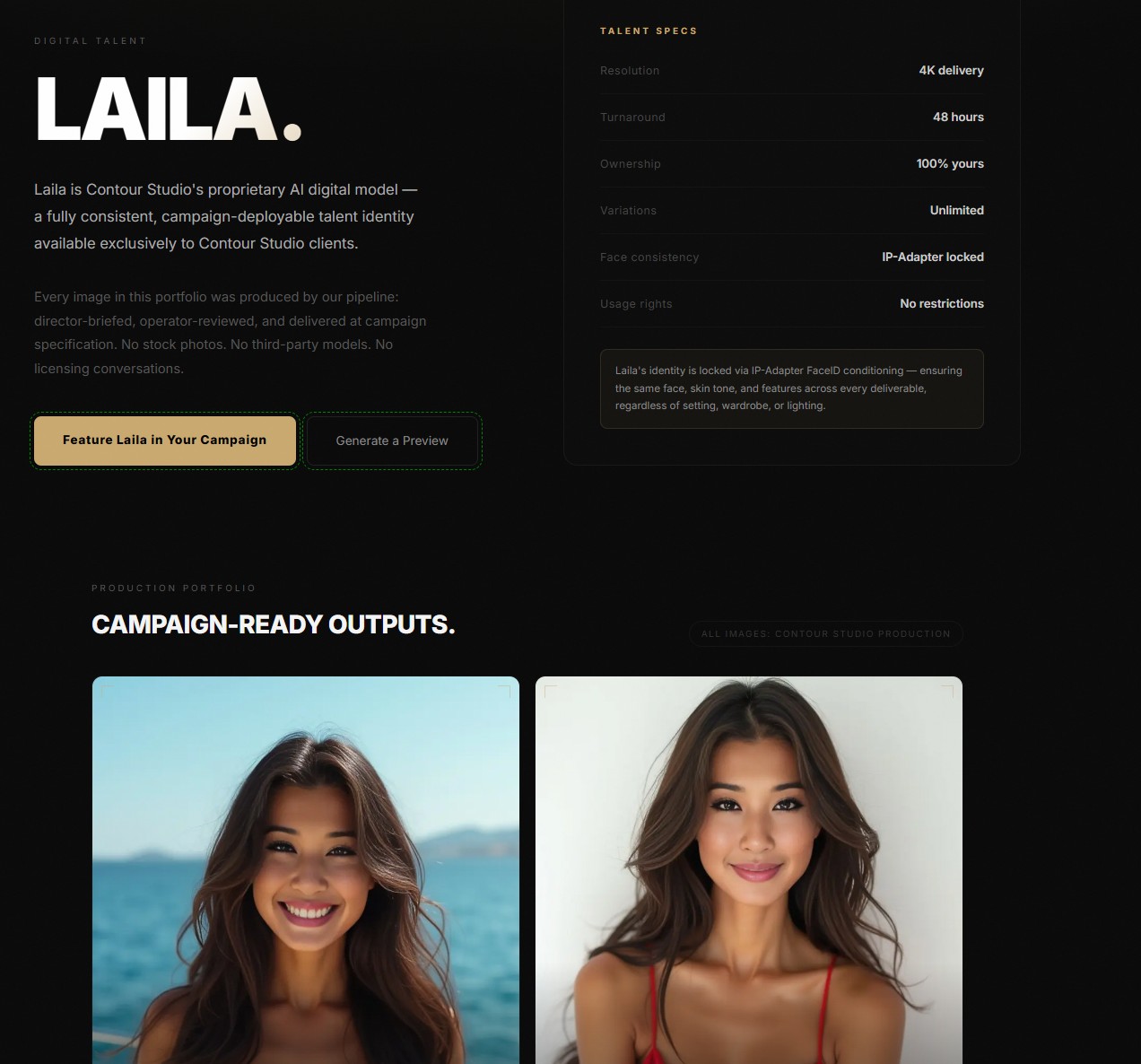
Built an AI pipeline that generates hyper-realistic model imagery from a small set of reference photos, with consistent face identity and brand styling across every output.

03

Results

Enabled brands to produce studio-quality content in minutes instead of weeks, at a fraction of the cost — live and generating revenue within seven days.

(Screenshots)
AI Digital Model Platform screenshot 1
AI Digital Model Platform

The full story behind AI Digital Model Platform.

(Case Study)
01

The Vision: On-Demand Digital Models for the Modern Creative Industry

The creative industry has a production problem. Traditional photoshoots require booking models, securing studio space, coordinating hair and makeup, managing wardrobe, and spending days in post-production — all for a set of images that might not land with the target audience. If the brand wants variations, new angles, or seasonal updates, the entire process starts over. The cost is prohibitive. The timelines are glacial. And the output is rigid.

This platform was born from a simple question: what if brands could generate hyper-realistic model imagery on demand, with consistent identity, any wardrobe, any setting, any mood — in minutes instead of weeks?

The client came to us with that vision and a tight window to prove it out. They needed a functional platform that could demonstrate the technology to early adopters, generate revenue from day one, and scale as they built out their internal team. The deliverable was not a prototype — it was a production platform that had to work in the real world, with real customers, under real scrutiny.

We had one week to deliver.
02

Building the AI Engine: Photorealism with Identity Preservation

The core technical challenge was generating model imagery that looked indistinguishable from professional photography while maintaining consistent facial identity across outputs. Generic AI image tools produce impressive results but struggle with identity consistency — the same "model" looks slightly different in every generation, which is unacceptable for brand campaigns that require a cohesive visual identity.

We engineered a pipeline tuned for photorealistic human generation with identity anchoring. The system takes a small set of reference photos — as few as five — and learns the subject's facial geometry, skin texture, and distinguishing features. Once learned, that identity can be applied to any generation prompt, so output maintains the subject's likeness regardless of pose, lighting, wardrobe, or environment.

The capability extends beyond still images to video, where a digital model's face can be composited onto existing footage with frame-level consistency. That opens up product placement, brand campaigns, and social content where video is increasingly the dominant format. Natural expressions, head movement tracking, and lighting consistency are preserved, so the result reads as footage shot with the actual model.

For product placement specifically, the system can composite digital models into existing product photography or environmental shots. A fashion brand can generate their digital model wearing a new collection in a studio setting, then place that same model in a street-style context, a café, a beach — all without reshooting. The consistency of identity across those varied settings is what makes the output commercially viable.

The pipeline handles batch generation efficiently. A brand submits a brief — "model wearing navy blazer, outdoor urban setting, golden hour lighting, editorial style" — and receives multiple variations within minutes. A quality control layer automatically filters outputs on technical criteria: face alignment accuracy, lighting consistency, resolution targets, and artefact detection. Only generations that pass every gate are delivered.

03

The Platform: From Generation Engine to Business Tool

A powerful AI engine is worthless without a platform that makes it accessible, manageable, and monetizable. We built the full user-facing application on managed cloud infrastructure handling authentication, subscription management, and storage.

The interface was designed for creative professionals, not AI engineers. Users upload reference photos through a guided onboarding flow that validates image quality, face visibility, and diversity of angles. The system gives real-time feedback on training-set quality and estimates the resulting accuracy before the user commits. That transparency builds trust with people investing in a digital asset they expect to use commercially.

Once a digital model exists, users work in a generation studio where they compose outputs through natural language prompts augmented by structured controls — style presets, aspect ratio selectors, lighting profiles, and wardrobe reference uploads. A live preview grid shows generations in progress, with the ability to iterate, refine, and regenerate specific outputs.

The data layer enforces strict per-tenant isolation, so each customer's models, generations, and billing data are separated. Authentication supports email and single sign-on flows, with role-based access for team accounts where multiple users under one brand share access to a digital model.

Privacy compliance was a foundational requirement, not a bolt-on. The platform is built to comply with PIPA (British Columbia's Personal Information Protection Act) and PIPEDA (Canada's federal privacy legislation). User data, reference photos, and generated outputs are stored in Canadian data centres. Consent flows are designed into onboarding. Retention policies are automated — when a user deletes their account, all associated data is permanently purged within the regulatory timeframe.

04

One-Week Turnaround: How We Shipped Production Software in Seven Days

Delivering a production-ready platform in one week sounds aggressive — because it is. The timeline was non-negotiable: the client had early adopters lined up and a revenue opportunity that would evaporate if the platform wasn't live.

We made it possible through disciplined scope management and parallel workstreams. Day one went entirely to architecture decisions and task decomposition. We identified the critical path — the minimum set of features required for the platform to generate revenue — and ruthlessly deprioritized everything else.

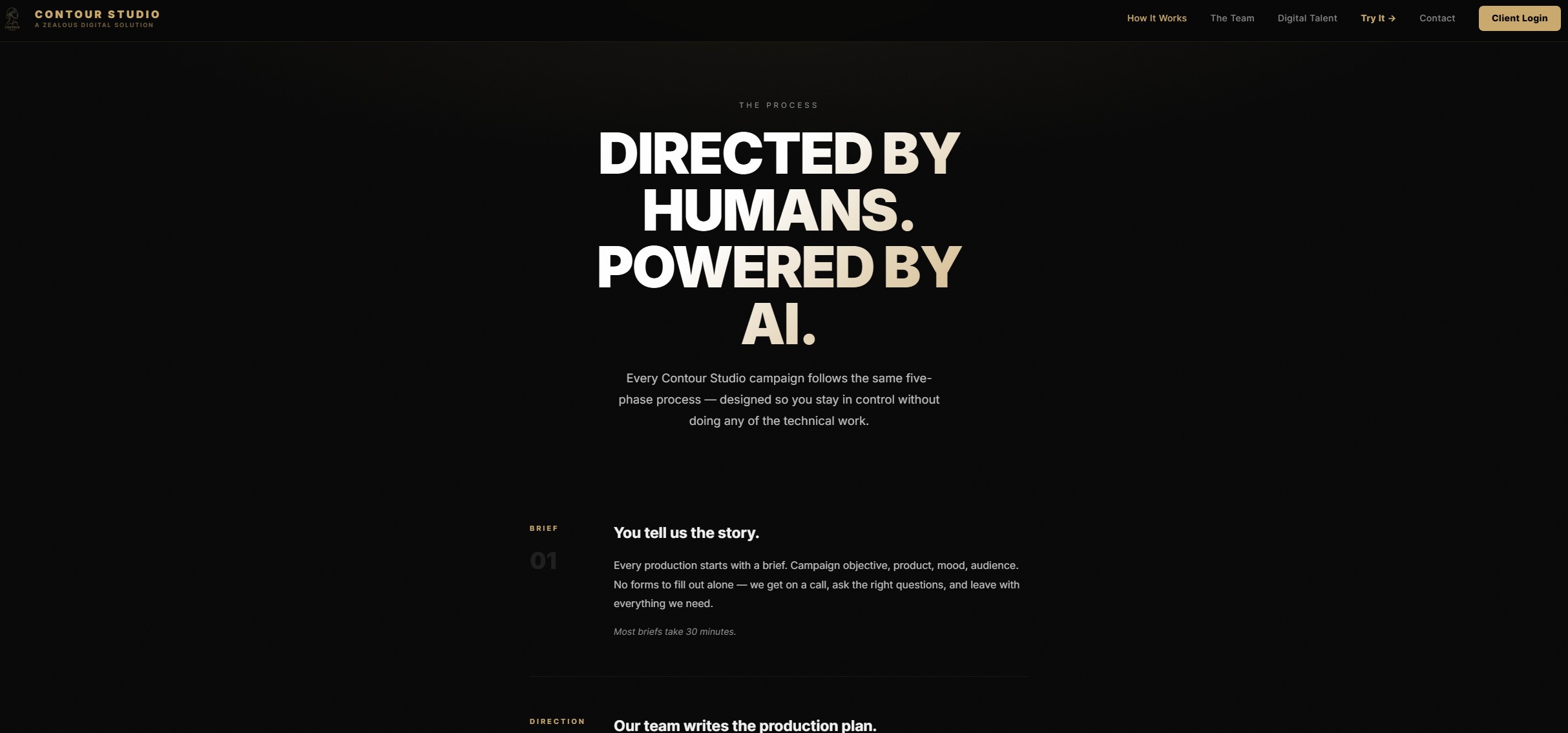
Days two through five were pure execution. The generation pipeline, the interface, and the infrastructure were developed in parallel against clearly defined interfaces, so no workstream had to wait on another to start.

Day six was integration and testing. All three workstreams converged and we ran the platform end to end with real inputs. QA focused on the user-critical paths: onboarding, model training, generation, and output delivery. Edge cases and nice-to-haves were logged for the post-launch cycle.

Day seven was deployment, monitoring setup, and handover. The platform went live with dashboards tracking generation success rates, response times, and error rates. The client received documentation covering operations, common troubleshooting, and the process for requesting enhancements.

This compressed timeline was possible because the foundations — authentication, payments, media storage, deployment — are patterns we have refined across many projects. We didn't reinvent them; we configured proven solutions for this specific product.

05

The Path to Monetization

This platform isn't just a tool the client uses — it's a product the client sells. It was designed from day one as a revenue-generating asset with clear monetization pathways.

The subscription model offers tiered access: individual creators, small studios, and enterprise brands each get pricing calibrated to their usage patterns and generation volumes, with automated usage tracking and billing.

Marketing compounds off the product itself. When users generate particularly striking outputs — with their permission — those can be featured in a public showcase, so the gallery stays fresh without manual curation. Educational content about AI model photography, use cases, and industry trends publishes through the same content pipeline, driving organic search traffic back to the platform.

The client's longer-term vision is a marketplace, where digital models are created once and licensed to multiple brands — similar to stock photography but with consistent, exclusive identities. The architecture supports that evolution: the multi-tenant data model, role-based access, and content infrastructure can accommodate marketplace features without a ground-up rebuild.

This project demonstrates what's possible when AI capabilities are packaged into a professionally engineered platform with a clear business model. The technology is impressive, but the real value is making it accessible, reliable, and commercially viable — which is exactly what we delivered in seven days.

Want Something Like This?

Every project starts with a conversation. Tell me the problem — I'll show you the system that solves it.