Contour Studio: AI Digital Build Case Study
Contour Studio is an AI production studio that creates campaign-ready fashion imagery. How Frank Yao built the platform in seven days, and what small brands can learn.
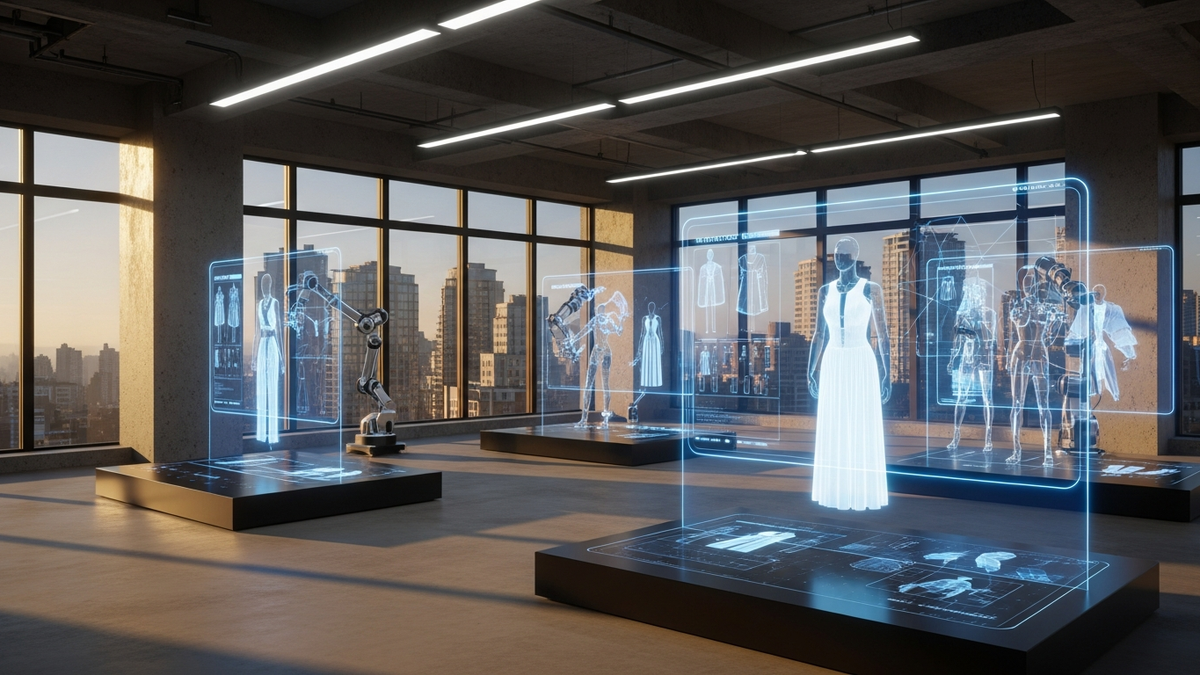

Contour Studio Build
Need a Contour Studio-style AI product build?
Frank Yao builds AI digital model generation, e-commerce automation, and custom app systems for founders who need a real product, not a demo.
Contour Studio is an AI production studio that creates campaign-ready fashion and lifestyle imagery. It is a Zealous Digital Solutions product that I built. This is how it works, and what every small creative business can take from it.

TL;DR
- Contour Studio produces campaign assets with AI, directed and reviewed by people at each step
- The platform behind it went from kickoff to launch in 7 days, with image generation under 30 seconds per output
- It keeps a model's identity consistent across wardrobe, setting and format, starting from a small set of reference photos
- Its stated standard turnaround is 48 hours from an approved brief
- The lesson for small brands: AI output looks intentional when a clear brief, human direction and quality checks surround the model
What Is Contour Studio?
Contour Studio is an AI production studio for brands. Its public site leads with AI-powered fashion ads, and its portfolio includes swimwear, editorial fashion and luxury campaigns. It is a production of Zealous Digital Solutions.
The studio's signature asset is Laila, its proprietary AI digital model. Her face is locked across every output, so the same talent can appear in a still, a video or a social post and stay recognizable.
The problem it solves is expensive. A traditional photoshoot means booking models, studio space, hair and makeup, wardrobe and days of post-production, and every new variation starts the process over.
That gap is the job I do.
Why Do Most Fashion Brand Websites Fail?
The pattern is common. A creative founder builds a beautiful brand. Instagram looks polished. Photography is professional. The website launches. And nothing happens.
No traffic. No email sign-ups. No conversions.
The website looks fine. It just doesn't work. Here's why, three reasons, every time.
Reason one: the site is slow. Page speed shapes first impressions and conversions, so a slow template can undercut great photography.
Reason two: no SEO architecture. The designer builds a gorgeous site. No keyword research behind any page. No schema markup. No metadata strategy. No internal linking structure. The brand is invisible to anyone who doesn't already know the name.
Reason three: no automation. The founder writes every caption, schedules every post and answers every inquiry by hand. This isn't a business. It's a second job.
Contour Studio takes on the production side of that problem: the imagery every product page, ad and post needs.
How Did I Build Contour Studio?
The platform is built with React and Node.js on managed cloud infrastructure that handles authentication, subscriptions and storage.
Every choice has a reason.
The build took seven days. Day one went to architecture decisions and task breakdown, identifying the minimum features needed to earn revenue. Days two through five built the generation pipeline, the interface and the infrastructure in parallel. Day six was integration and end-to-end testing with real inputs. Day seven was deployment, monitoring setup and handover.
The interface is built for creative professionals, not AI engineers. Users upload reference photos through a guided onboarding flow that checks image quality, face visibility and variety of angles, then compose outputs with natural-language prompts plus structured controls such as style presets, aspect ratios, lighting profiles and wardrobe references.
Each customer's models, generations and billing data are kept separate, and team accounts get role-based access so several people under one brand can share a digital model.
The foundations (authentication, payments, media storage, deployment) are patterns refined across earlier projects in my AI automation services practice. Reusing them instead of reinventing them is what made a seven-day launch possible.
What AI Systems Did I Wire Into Contour Studio?
The generation engine is the core of the product.
Three pieces make it work, and each solves a problem generic AI image tools don't.
Identity-Locked Generation
Generic AI image tools can produce striking images, but the same "model" looks slightly different in every generation, which doesn't work for a brand campaign. Contour Studio's pipeline anchors identity, so the subject stays recognizable regardless of pose, lighting, wardrobe or environment.
The same approach extends to video: a digital model's face can be composited onto existing footage with frame-level consistency, and models can be placed into existing product or location shots without a reshoot.
A brand submits a brief and receives multiple variations within minutes, with each image generated in under 30 seconds.
Human Direction and Quality Control
Speed only matters if the output is usable. Every asset is reviewed by a human operator and compared to the brief before it advances, and the platform's automated checks cover face alignment, lighting consistency, resolution and artefacts.
Anything that doesn't pass goes back. Clients only see work that cleared both layers.
Privacy and Data Residency
Privacy was a foundational requirement. The platform is built to comply with PIPA, British Columbia's Personal Information Protection Act, and PIPEDA, Canada's federal privacy law. User data, reference photos and generated outputs are stored in Canadian data centres, consent is built into onboarding, and deleting an account purges the associated data. That data residency requirement is Lower Mainland BC context I carry into every build I do.
For a platform that stores people's faces, that isn't optional. It's why brands can trust it with an asset they plan to use commercially.
How Does AI Content Generation Actually Work for a Fashion Brand?
This is the part most founders misunderstand.
AI-generated content fails when it has no brand constraint. You ask a generic AI tool to write about spring lingerie and you get keyword-stuffed paragraphs that read like a press release. No voice. No specificity. Unpublishable.
The fix is constraints.
For Contour Studio, the constraints are a written brief (campaign objective, product, mood, audience), a production plan the client approves before anything renders, an identity lock on the talent, and a review step that compares every output to the brief.
With those constraints in place, the output sounds like it came from the brand, not a content mill.
The same principle runs through the content systems at Zealous Digital: constrained AI output saves hours; unconstrained output wastes them.
Why Does a Fashion Brand Need SEO?
Most fashion founders think SEO is for service businesses. Plumbers. Lawyers. Dentists.
Wrong.
Search is where purchase intent lives. Someone typing 'lingerie boutique Vancouver' into Google isn't casually browsing. They're ready to buy. That intent is worth capturing.
Consider the searches a Vancouver fashion or lingerie boutique could target:
- 'intimate apparel Vancouver'
- 'luxury lingerie boutique Vancouver'
- 'lingerie gift Vancouver'
- 'boudoir fashion Canada'
- 'women's fashion boutique Vancouver'
Queries like these signal purchase intent. Check their volume and competition in Search Console or a keyword tool before you build pages for them. A well-optimized page puts a brand in front of the right person at the right moment, without ad spend.
Brands that treat search as a growth channel from the start don't depend only on social reach to be found.
The SEO work at Zealous Digital is built on that idea: a page that ranks keeps earning traffic without ongoing ad spend.
What SEO Architecture Should a Fashion Brand Site Have?
Four layers. Each builds on the last.
Layer 1: Product pages. Each category gets its own page with a title tag, meta description, H1 and relevant schema, on a clean URL structure such as /collections/category.
Layer 2: Editorial content. Blog articles targeting long-tail fashion searches: Vancouver-specific, Canada-wide and category terms. Each article puts the exact keyword in the title, H1, first sentence and meta description.
Layer 3: Location pages. Local landing pages with LocalBusiness schema and a linked Google Business Profile, to capture near-me and city-qualified searches.
Layer 4: Brand story pages. About page, founder story, brand philosophy. These build E-E-A-T signals: experience, expertise, authoritativeness and trustworthiness.
Every page has canonical tags, Open Graph metadata, and proper internal linking structure. Nothing is left to default.
What Is the Full Tech Stack?
From the portfolio case study:
- Front end: React
- Back end: Node.js
- Storage: cloud storage, with user data kept in Canadian data centres
- Infrastructure: managed cloud services for authentication, subscriptions and storage
- Generation: an AI pipeline with identity locking and quality gates
- Monitoring: dashboards for generation success rate, response time and error rate
The architecture was designed to grow: the multi-tenant data model and role-based access can support a future marketplace where digital models are licensed to multiple brands, without a ground-up rebuild. That kind of forward planning is part of the AI automation services work I do.
How Do You Measure Whether a Fashion Brand's Digital Build Is Working?
Three metrics. Everything else is noise.
Organic search impressions. Measured in Google Search Console. Growing impressions week over week confirm the content and SEO architecture are doing their job.
Email list growth rate. Track how fast the list grows each month. Each subscriber has a computable lifetime value.
Session-to-conversion rate. How many visitors take a meaningful action: add to cart, click to a product page, submit a form. Deloitte and Google's Milliseconds Make Millions study (2020) found that a 0.1-second improvement in mobile site speed increased retail conversions by 8.4%. Small performance improvements show up directly in revenue.
Check these three numbers weekly. If impressions are flat after 90 days, the content strategy needs adjusting. If list growth stalls, the capture flow needs a new incentive. If conversion rate drops, something in the site experience broke.
Data drives the decisions. Not gut feel.
What Can Small Fashion Brands Learn From This?
Most small fashion brands operate backwards.
They build a social following before they build a foundation. They invest in photography before they invest in infrastructure. Then they wonder why a beautiful brand generates no revenue.
The sequence that actually works: 1. Build a fast, indexable website with proper SEO architecture. 2. Wire in automation for content, email, and local search. 3. Build the social following on top of that foundation, so every follower lands somewhere designed to convert.
Contour Studio applies the same idea to imagery: infrastructure that keeps producing without constant manual input.
How Much Does an AI-Powered Fashion Brand Website Cost?
Cost depends on scope: how many integrations the site needs, whether AI generation or automation is involved, and how much content and SEO architecture has to be built. Any fixed number quoted without seeing your scope is a guess.
The fastest way to a real number is a scoped conversation about what you need to launch first.
Is This Build Right for Your Business?
Contour Studio is one case. The pattern repeats.
Any small creative business, fashion brand, wellness studio, boutique retailer, photography studio, faces the same choice. Build a cheap website and stay invisible. Or build a proper digital foundation and let it work while you sleep.
My portfolio includes builds for a custom home builder, a tree care company, a pediatric therapy practice and a short-term rental co-hosting business. The industries are different. The problem is always the same. A great business that nobody can find is not a great business.
If that describes where you are, book a discovery call at FrankYao.com. We'll audit your current digital presence, identify the highest-impact gaps, and build a plan to fix them.
FAQ
What is Contour Studio? Contour Studio is an AI production studio and a Zealous Digital Solutions product. It creates campaign-ready fashion and lifestyle imagery and video using AI, with a human-directed brief, a locked talent identity and review at every step.
What is Contour Studio built on? The platform uses React and Node.js on managed cloud infrastructure, with user data, reference photos and generated outputs stored in Canadian data centres.
How does AI help a small fashion brand? It removes the photoshoot bottleneck. Instead of booking a shoot for every new collection, setting or format, a brand can get consistent, campaign-ready model imagery quickly and spend its time on product and marketing.
Why is SEO important for a fashion brand that already has social media presence? Social media builds awareness. Search captures intent. Someone who types 'lingerie boutique Vancouver' into Google is ready to buy, not casually browsing. Organic search traffic compounds over time and keeps working after the foundation is built. Social media reach, by contrast, drops the moment you stop posting.
How do I work with Frank Yao to build something like this? Book a discovery call at FrankYao.com. The process runs week 1 discovery and audit, weeks 2 to 6 build with weekly demos, then launch with 30 days of support.
Related: How long does it take to set up AI automation for a business?
Related Articles



Ready to put this into action?
Let's talk about how AI automation and smart digital strategy can drive real results for your business.
Enjoying this content? Pin us as a priority in Google.
Make us your preferred source on Google